
Welcome to United States of America
The United States of America banner blends the waving flag, the White House, John F. Kennedy, and Native American heritage into a dramatic patriotic scene. It presents the country as a place shaped by freedom, leadership, history, diverse cultures, and sweeping landscapes.
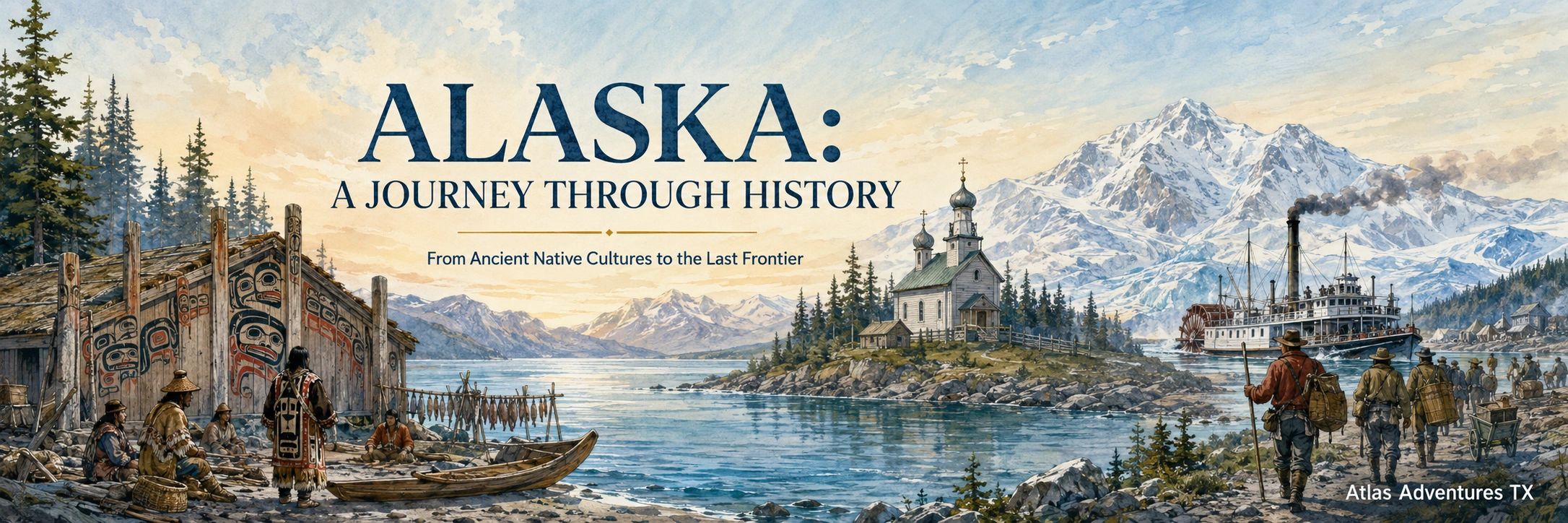
Welcome to Alaska
Alaska’s history begins with Indigenous peoples who developed rich cultures adapted to its coasts, forests, tundra, and Arctic climate over thousands of years. Russia colonized the region in the 1700s before selling it to the United States in 1867, and Alaska later experienced gold rushes, wartime development, and statehood in 1959.
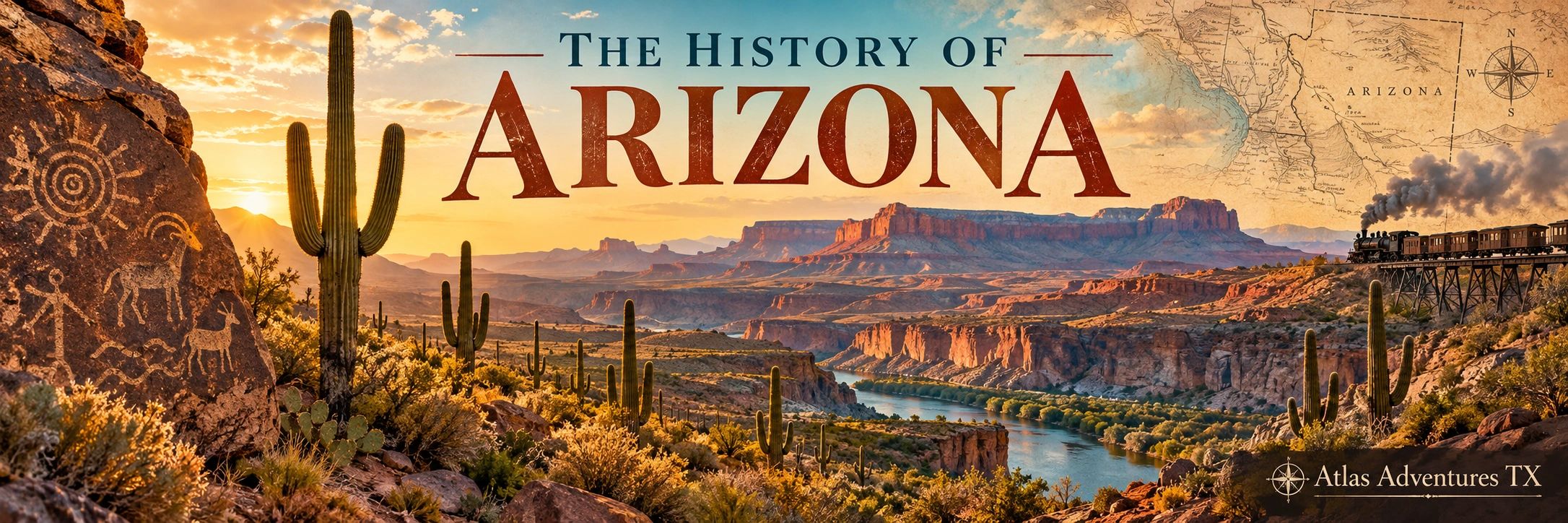
Welcome to Arizona
Arizona’s history stretches from the ancient communities and enduring cultures of its Indigenous peoples through Spanish and Mexican rule to U.S. statehood. Explore the places and stories that shaped the Grand Canyon State.

Welcome to Arkansas
Arkansas blends steamy Hot Springs bathhouse charm, forested hills, and rugged natural beauty into a landscape worthy of its nickname, The Natural State. From historic thermal waters to old oil derricks on the horizon, this banner captures the state’s mix of nature, history, and Southern character.
Adventure
Explore Pinterest
Welcome to Colorado
Beautiful Colorado is a land of snow-capped mountains, golden aspen forests, old mining towns, and wide-open trails that feel made for adventure. From rugged peaks to peaceful valleys, it blends Old West history with some of the most breathtaking scenery in America.
History
Adventure
Explore Pinterest
Articles
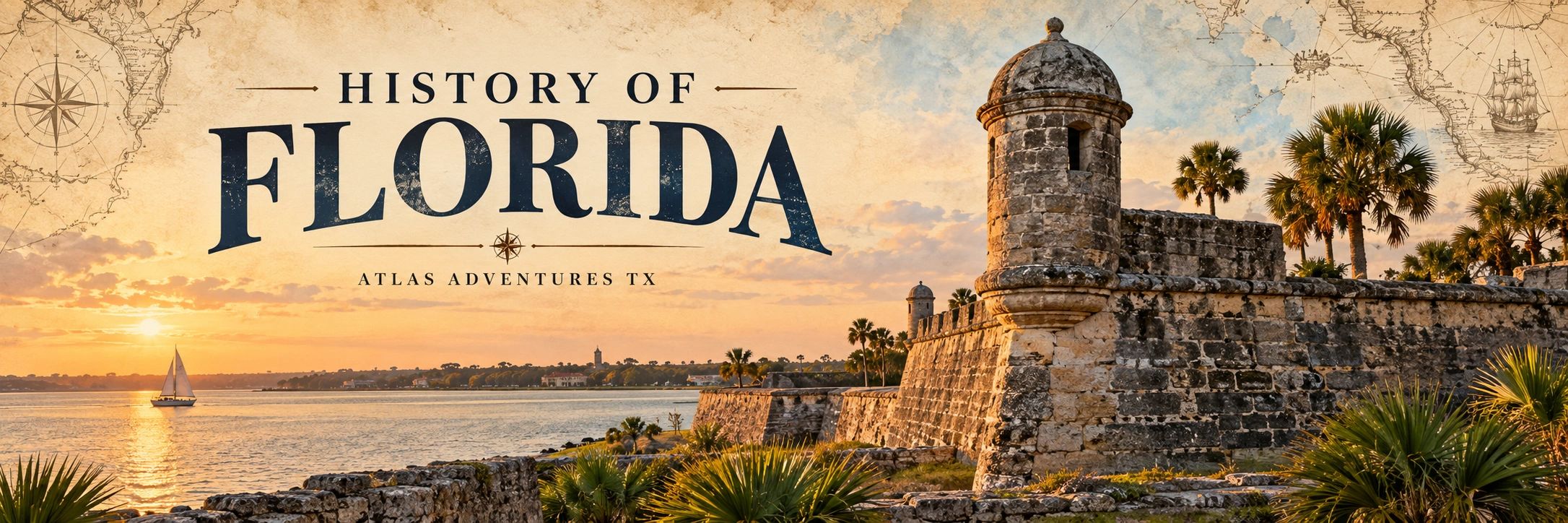
Welcome to Florida
Florida’s history begins with the Indigenous peoples who lived here for thousands of years before Spanish explorers arrived and founded St. Augustine. Its story continues through colonial rule, statehood, and the many communities that shaped the Florida we know today.
History
Adventure
Explore Pinterest

Welcome to Georgia
Georgia’s history stretches from ancient Native American cultures and colonial settlement to the upheaval of the Civil War and Reconstruction. Today, the state blends its deep Southern heritage with modern cities, diverse communities, and a growing national influence.

Welcome to Idaho
Idaho’s history begins with Indigenous peoples, including the Nez Perce, Shoshone-Bannock, and Coeur d’Alene, who lived across the region for thousands of years. During the 1800s, explorers, Oregon Trail travelers, miners, farmers, and railroad workers transformed the territory before Idaho became the 43rd U.S. state in 1890.
Welcome to Louisiana
Louisiana’s history began with Indigenous nations and was later shaped by French and Spanish rule, African and Caribbean influences, Acadian settlement, and Mississippi River commerce. After joining the United States in 1812, its diverse communities created a distinctive Creole and Cajun culture that helped give rise to jazz and other celebrated traditions.
Adventure
Explore Pinterest
More Soon
Welcome to Mississippi
Mississippi’s history begins with Indigenous peoples and powerful mound-building cultures, followed by European colonization and the forced labor of enslaved Africans who shaped its agricultural economy. After the Civil War, the state endured Reconstruction and the struggle for civil rights while becoming celebrated worldwide as the birthplace of the blues.

Welcome to Montana
Montana is a vast and rugged state known for its big skies, mountain ranges, open plains, wildlife, and outdoor adventure. From Glacier National Park to small historic towns and scenic RV routes, it is a destination built for travelers who love nature, space, and wild beauty.
Adventure
More Soon
Welcome to New Mexico
New Mexico’s history begins with ancient Indigenous cultures and enduring Pueblo communities, followed by Spanish colonization in 1598 and Mexican rule after 1821. It became part of the United States in 1848 and achieved statehood in 1912, creating a rich blend of Native American, Hispanic, Mexican, and Anglo traditions.
Welcome to North Carolina
North Carolina’s history stretches from the homeland of Indigenous peoples such as the Cherokee, Catawba, and Tuscarora through English colonization and an important role in the American Revolution. After the Civil War, the state grew through agriculture, textiles, tobacco, education, aviation, and technology, developing into a diverse modern center of industry and culture.
History
Adventure
Articles
Welcome to Texas
Texas is a land shaped by Indigenous cultures, Spanish missions, frontier settlements, ranching traditions, and a fierce spirit of independence. Today, life in Texas blends big-city energy, small-town pride, wide-open landscapes, rich food traditions, music, history, and a deep connection to the land.
History
Adventure
Explore Pinterest
More Soon
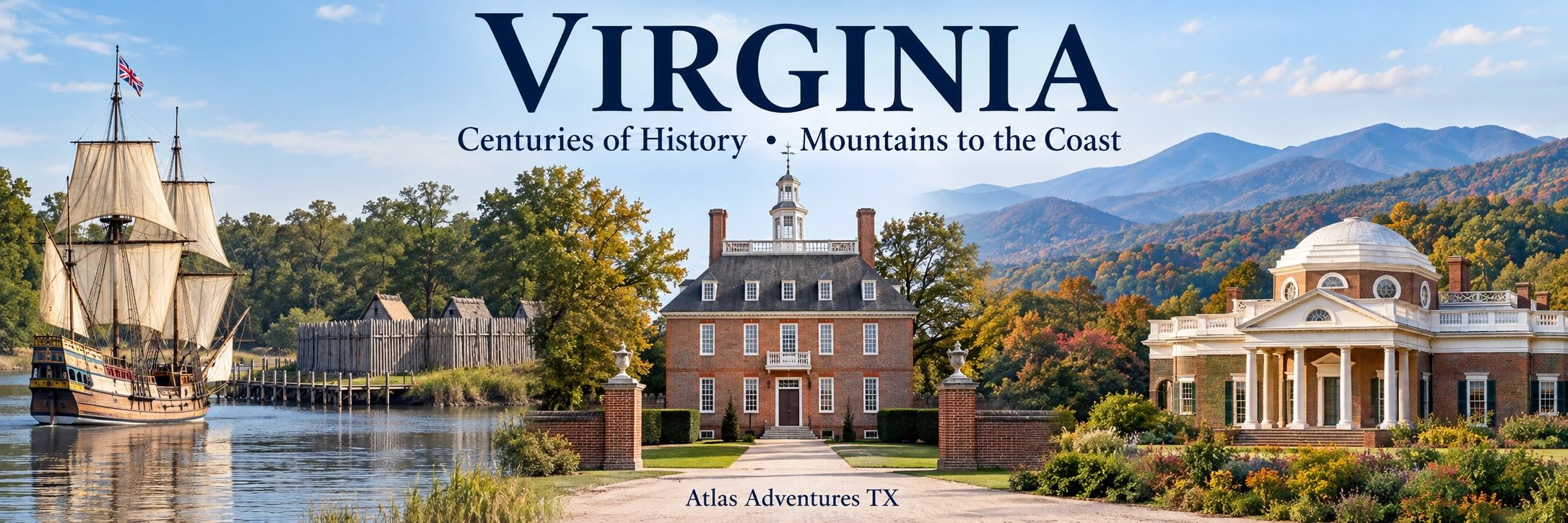
Welcome to Virginia
Virginia blends Blue Ridge mountain scenery, Atlantic beaches, and historic towns with a rich and complex past. From its Indigenous heritage and Jamestown to the American Revolution and Civil War, the state’s landmarks reveal centuries of stories that helped shape America.

America at War
The United States has been shaped by major wars, from the American Revolution and Civil War to World War I and World War II, each leaving a lasting mark on the nation’s identity, freedom, and place in the world. These conflicts tell a story of struggle, sacrifice, division, unity, and the difficult choices that shaped American history.
Native American Tribes
Native American tribes are diverse nations with distinct languages, homelands, histories, governments, spiritual traditions, and cultural practices shaped over thousands of years. Their stories are not only part of the past, but continue today through living communities, cultural preservation, sovereignty, art, land stewardship, and resilience.
History
Adventure
Explore Pinterest
Famous People

American Trails
American Trails celebrates the footpaths, mountain routes, forest walks, and historic corridors that connect people to the landscapes of the United States. Each trail carries its own story — shaped by nature, movement, exploration, and the people who walked there before us.
History
Adventure
Explore Pinterest
National Parks
The national parks of the United States protect extraordinary landscapes, wildlife, historic sites, and cultural stories across mountains, deserts, forests, coastlines, and volcanic regions. Created for conservation and public enjoyment, these treasured places preserve America’s natural heritage while inspiring exploration, education, and stewardship for future generations.
History
Adventure
Articles

U.S. Presidents
The history of U.S. presidents tells the story of leadership, crisis, ambition, and change from the nation’s founding to the modern era. Each presidency reflects the challenges of its time, shaping America through decisions that left lasting marks on the country and the world.
History
Adventure
Explore Pinterest